
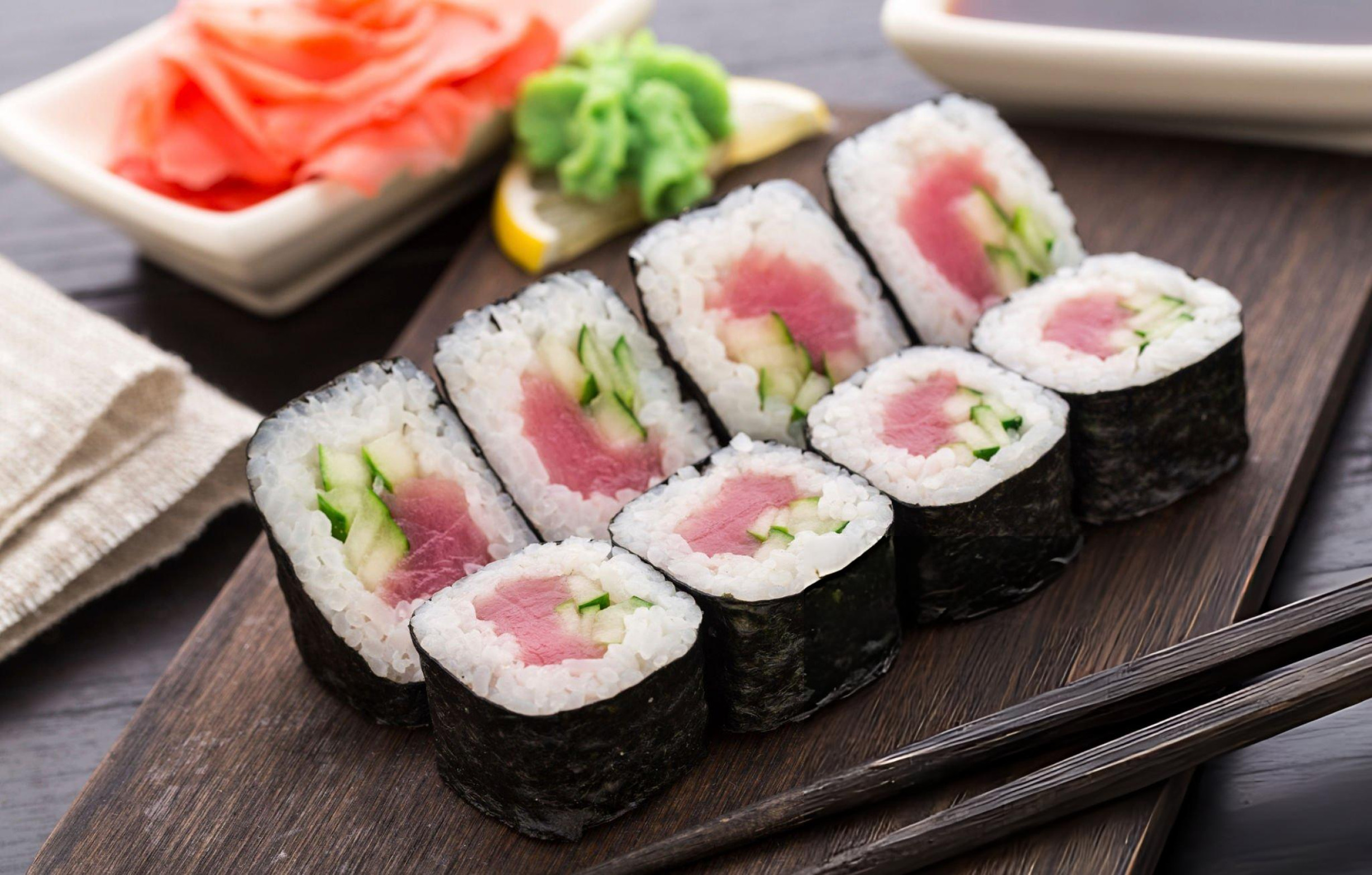
Tuna Sushi Rolls bring the fresh, vibrant flavors of your favorite sushi restaurant right into your own kitchen. Featuring perfectly seasoned sushi rice, tender ahi tuna, creamy avocado, and crisp cucumber wrapped in delicate nori, these rolls offer an impressive balance of texture and flavor while remaining surprisingly approachable to prepare at home.

Ingredients You’ll Need
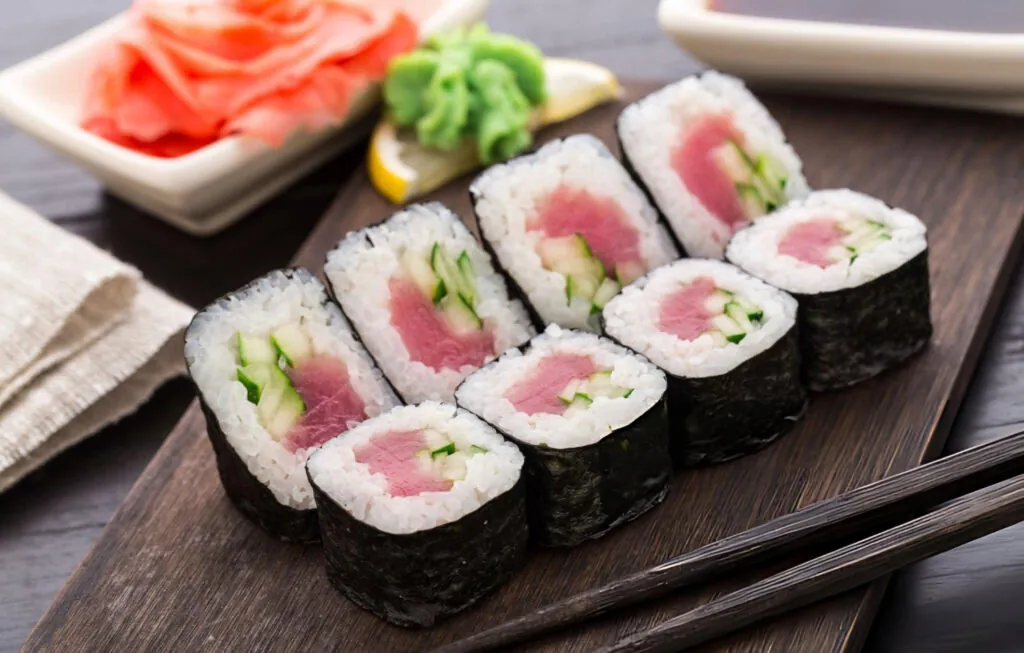
Every ingredient in these sushi rolls contributes to the finished dish’s authentic flavor and texture. The foundation begins with properly cooked white rice that is gently seasoned with a blend of rice vinegar, maple syrup, and sea salt. This delicate seasoning creates the signature balance of sweet, tangy, and savory flavors that define traditional sushi rice while helping it achieve the ideal sticky consistency for rolling.
The fillings are intentionally simple yet incredibly flavorful. Sushi-grade ahi tuna provides a clean, buttery taste and a tender texture that pairs beautifully with creamy avocado. Crisp cucumber adds refreshing crunch, creating contrast in every bite without overpowering the fish.
Nori sheets hold everything together while contributing their distinctive oceanic flavor. To complete the experience, classic accompaniments such as soy sauce, wasabi, or spicy sriracha mayo allow each person to customize every bite according to their preferred level of saltiness, heat, or richness.
Step-by-Step Instructions
Begin by preparing the sushi rice, as it serves as the foundation of every successful roll. Whisk together the rice vinegar, maple syrup, and sea salt until fully dissolved. Warm freshly cooked or reheated rice before gently folding in the seasoning mixture with a spatula. Mixing carefully prevents the rice from becoming overly sticky while ensuring every grain absorbs the subtle sweet-and-tangy flavor. Allow the rice to cool until it is warm rather than hot before assembling the rolls.
Lay a sheet of nori shiny-side down on parchment paper and spread an even layer of seasoned rice across the surface, leaving a one-inch border uncovered along the top edge. This exposed strip helps seal the roll securely. Arrange strips of sushi-grade ahi tuna, sliced avocado, and cucumber in a straight line across the center. Keeping the fillings evenly distributed ensures each slice contains the perfect balance of ingredients.
Using the parchment paper as a guide, carefully roll the nori over the filling while applying gentle pressure to form a compact cylinder. Continue rolling while pulling the parchment away to prevent it from becoming trapped inside. Let each completed roll rest for a few minutes before slicing, allowing the nori to soften slightly and helping the roll maintain its shape. Slice with a sharp knife into even pieces, cleaning the blade between cuts for crisp, professional-looking edges. Serve immediately with soy sauce, wasabi, or sriracha mayo for the freshest flavor and texture.
Recipe Tips
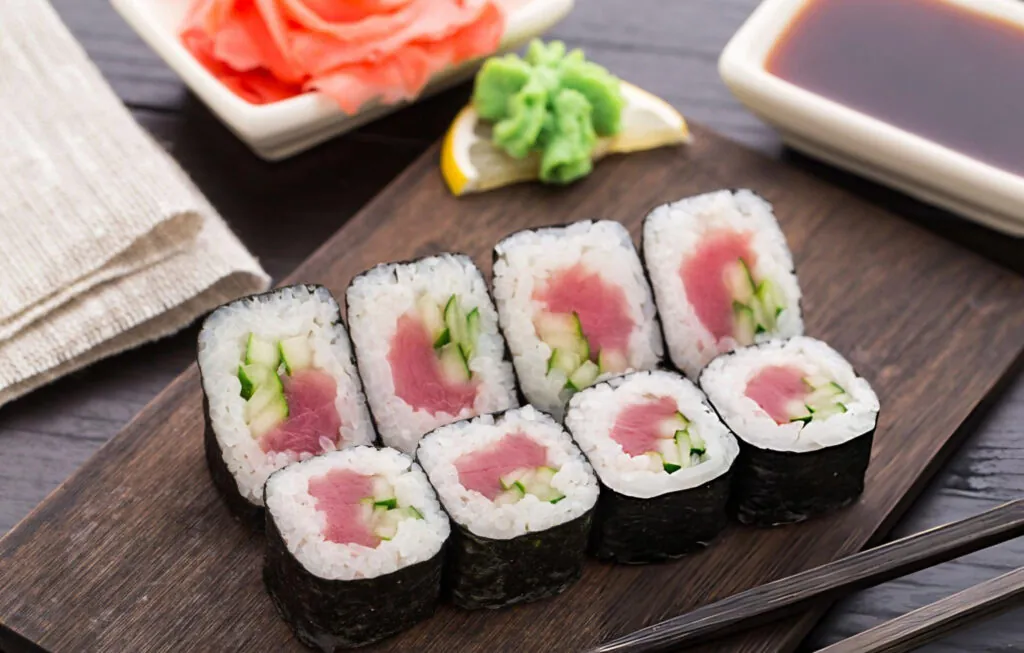
- How to Make Perfect Sushi Rice Every Time: Always season the rice while it’s warm so it absorbs the vinegar mixture evenly. Fold gently instead of stirring vigorously to preserve the rice’s delicate texture.
- Choosing the Best Sushi-Grade Tuna: Purchase sushi-grade or sashimi-grade ahi tuna from a trusted seafood supplier. Fresh, high-quality fish is essential when preparing sushi intended to be eaten raw.
- Easy Rolling Techniques for Beginners: Avoid overfilling the rolls, as too many ingredients make rolling difficult. Apply gentle, consistent pressure throughout the rolling process to create firm, evenly shaped sushi.
- Tips for Cutting Neat, Even Sushi Pieces: Use an extremely sharp knife and wipe the blade clean with a damp cloth after every few cuts. This prevents the rice from sticking and produces cleaner slices.
- Common Sushi-Making Mistakes to Avoid: Don’t use cold rice, as it won’t absorb the seasoning properly. Likewise, avoid compressing the rice too firmly, which can create dense rolls instead of light, delicate sushi.
What to Serve With This Recipe
These Tuna Sushi Rolls pair beautifully with traditional Japanese side dishes that complement their fresh flavors. A comforting bowl of miso soup, steamed edamame sprinkled with sea salt, or vegetable gyoza creates a balanced meal while maintaining the light, clean character of sushi.
Fresh salads also make excellent companions. Seaweed salad, cucumber salad, or an Asian slaw with sesame dressing adds brightness and refreshing crunch that contrasts beautifully with the creamy avocado and tender tuna.
Complete the meal with a selection of dipping sauces and condiments such as soy sauce, ponzu, spicy mayo, pickled ginger, or freshly prepared wasabi. For beverages, green tea, sparkling water with citrus, iced jasmine tea, or chilled sake provide refreshing pairings that enhance the sushi without overwhelming its delicate flavors.
Storage and Make-Ahead Tips
Homemade sushi is always at its best when enjoyed shortly after preparation. However, leftover rolls can be stored in an airtight container in the refrigerator for up to one day. Wrapping them tightly helps prevent the rice from drying out while preserving the freshness of the fillings.
The sushi rice can be prepared several hours ahead of time and kept covered at room temperature until ready to assemble. Avoid refrigerating seasoned sushi rice, as chilling can make it firm and diminish its pleasant texture.
To keep sliced avocado looking fresh, prepare it immediately before assembling the rolls whenever possible. If advance preparation is necessary, lightly brushing the avocado with lemon or lime juice may help reduce browning. Because raw tuna is highly perishable, assembled sushi should be served promptly and is not recommended for freezing, as both the fish and rice lose their ideal texture after thawing.
Frequently Asked Questions
- Can I Use Canned Tuna Instead of Ahi Tuna? Yes. Although the flavor and texture will differ, canned tuna mixed with a little mayonnaise can be used for a cooked variation.
- What Type of Rice Is Best for Sushi? Short-grain Japanese sushi rice is the preferred choice because of its naturally sticky texture, which holds the rolls together effectively.
- How Do I Keep Sushi Rolls from Falling Apart? Leave a border of uncovered nori, avoid overfilling, and roll firmly but gently to create a compact, well-sealed roll.
- Can I Make These Rolls Without a Bamboo Mat? Absolutely. Parchment paper or a clean kitchen towel works well as an alternative for shaping and rolling the sushi.
- Can I Add Other Vegetables or Fillings? Certainly. Carrots, bell peppers, asparagus, mango, cream cheese, or cooked shrimp are all delicious additions that allow for endless customization.
- Is It Safe to Eat Raw Tuna at Home? Yes, provided you purchase sushi-grade or sashimi-grade tuna from a reputable seafood supplier and keep it properly refrigerated until use.
- Can Tuna Sushi Rolls Be Frozen? Freezing is not recommended. The rice, avocado, and raw tuna lose their ideal texture after thawing, resulting in significantly lower quality.
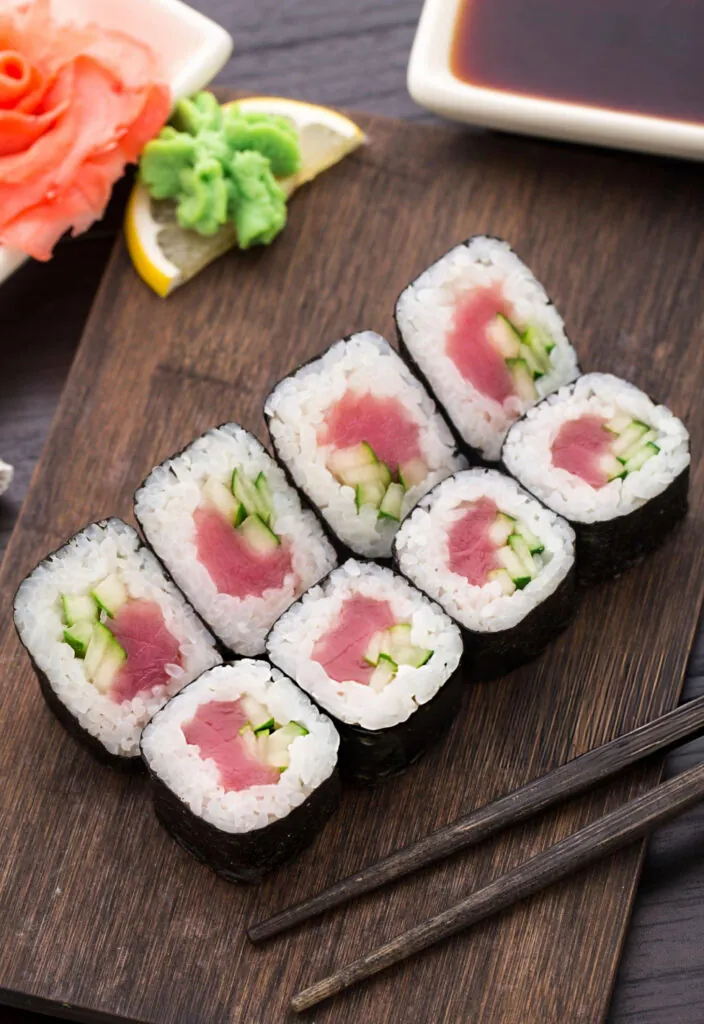
Making Tuna Sushi Rolls at home is an enjoyable culinary experience that combines fresh ingredients with simple techniques to create a meal that’s both elegant and satisfying. Each bite delivers the perfect harmony of seasoned rice, buttery tuna, creamy avocado, crisp cucumber, and delicate nori, making these rolls suitable for everything from casual dinners to special occasions.
Ingredients
For the Sushi Rice
- 3 packages organic cooked white rice (or 3 cups cooked white rice)
- ⅓ cup rice vinegar
- 1½ teaspoons sea salt
- 2 tablespoons pure organic maple syrup
For the Sushi Rolls
- 4 nori sheets
- 1 avocado, thinly sliced
- 2 mini cucumbers, cut lengthwise into quarters
- 10 ounces frozen wild-caught ahi tuna, thawed and sliced into ½-inch strips
- Soy sauce, wasabi, or sriracha mayo, for serving
Instructions
Prepare the Sushi Rice
- In a small bowl, whisk together the rice vinegar, maple syrup, and sea salt until the salt has completely dissolved.
- Heat the cooked rice according to the package directions if using ready-to-serve rice. If you’re using leftover rice, warm it thoroughly before seasoning, as warm rice absorbs the vinegar mixture much more effectively than cold rice.
- Transfer the warm rice to a large mixing bowl. Pour the prepared vinegar mixture over the rice and gently fold everything together with a spatula. Mix carefully to evenly coat every grain while avoiding excessive stirring that could make the rice mushy. Allow the rice to cool slightly until it’s comfortable to handle.
Assemble the Sushi Rolls
- Place one nori sheet on top of a piece of parchment paper with the shiny side facing downward.
- Divide the seasoned sushi rice into four equal portions. Spread one portion evenly over the nori sheet, leaving about a 1-inch border uncovered along the top edge to help seal the roll.
- Arrange several strips of ahi tuna across the center of the rice, then add slices of avocado and cucumber in a neat line to create an even filling from end to end.
- Starting from the edge closest to you, lift the parchment paper together with the nori and gently fold it over the filling. Press firmly but carefully to create a compact roll. Continue rolling forward while pulling the parchment paper away as you go so it doesn’t become wrapped inside the sushi. Roll until the exposed edge of the nori seals the roll completely.
- Leave the finished roll wrapped loosely in the parchment paper for 2 to 3 minutes. This brief resting period helps the nori soften slightly and allows the roll to hold its shape. Repeat the same process with the remaining rice, nori sheets, and fillings.
- Remove the parchment paper and place each sushi roll on a cutting board. Using a very sharp knife, slice the roll into 1-inch-thick pieces, wiping the blade clean between cuts if needed for neat, clean slices.
- Arrange the sushi rolls on a serving platter and serve immediately with soy sauce, wasabi, or sriracha mayo for dipping. Enjoy as a light meal, appetizer, or homemade sushi night favorite.