
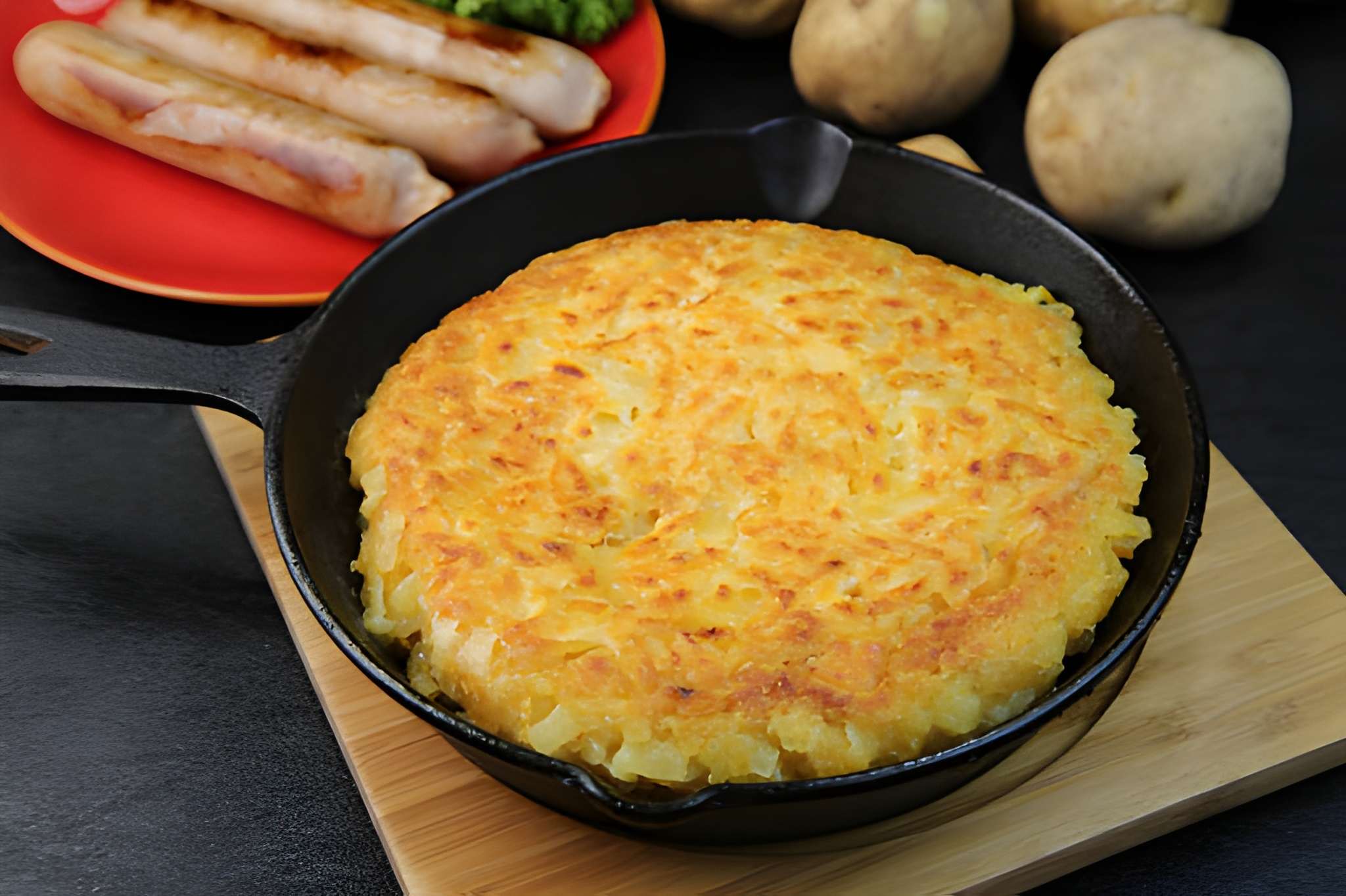
Potato rosti is all about restraint and precision. Crisp, golden edges give way to a soft, potato-rich center, creating a contrast that feels satisfying without being heavy. This approach prioritizes moisture control and steady heat, allowing the potatoes to brown evenly while maintaining their natural, comforting texture.

Ingredient Breakdown
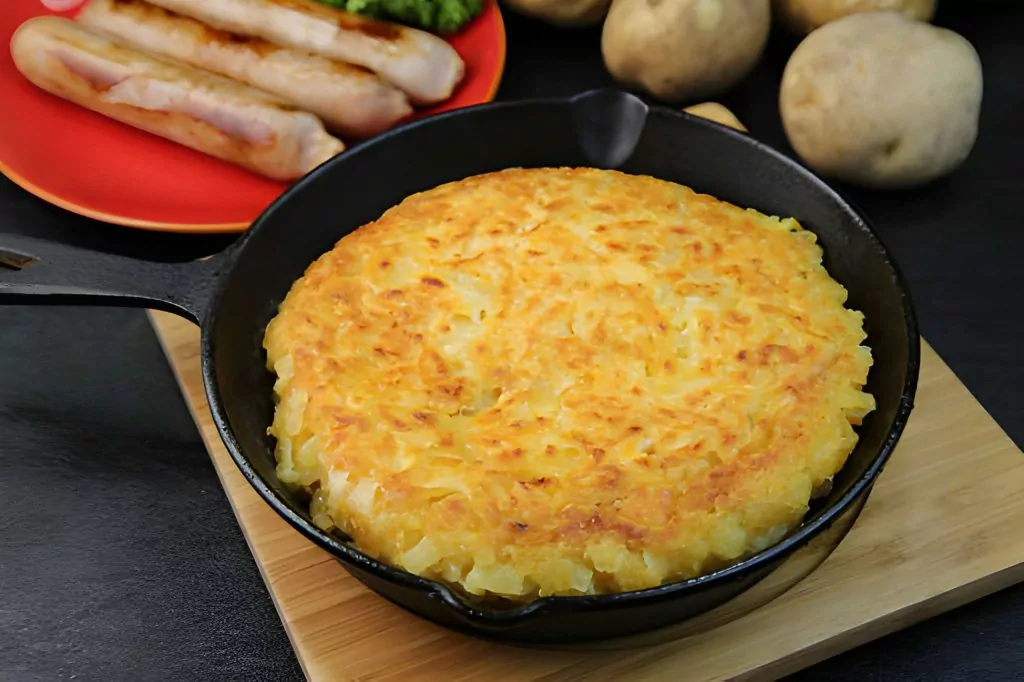
The success of a good rosti starts with the potatoes. Starchy varieties such as Yukon Gold, Russet, or Maris Piper provide the ideal balance of structure and tenderness once cooked. Clarified butter or ghee plays a crucial role, offering a higher smoke point and cleaner browning than standard butter. Seasoning is intentionally minimal—salt and black pepper enhance the potatoes without masking their flavor—while the choice of fat determines how crisp and evenly colored the finished rosti becomes.
Step-by-Step Preparation Guide
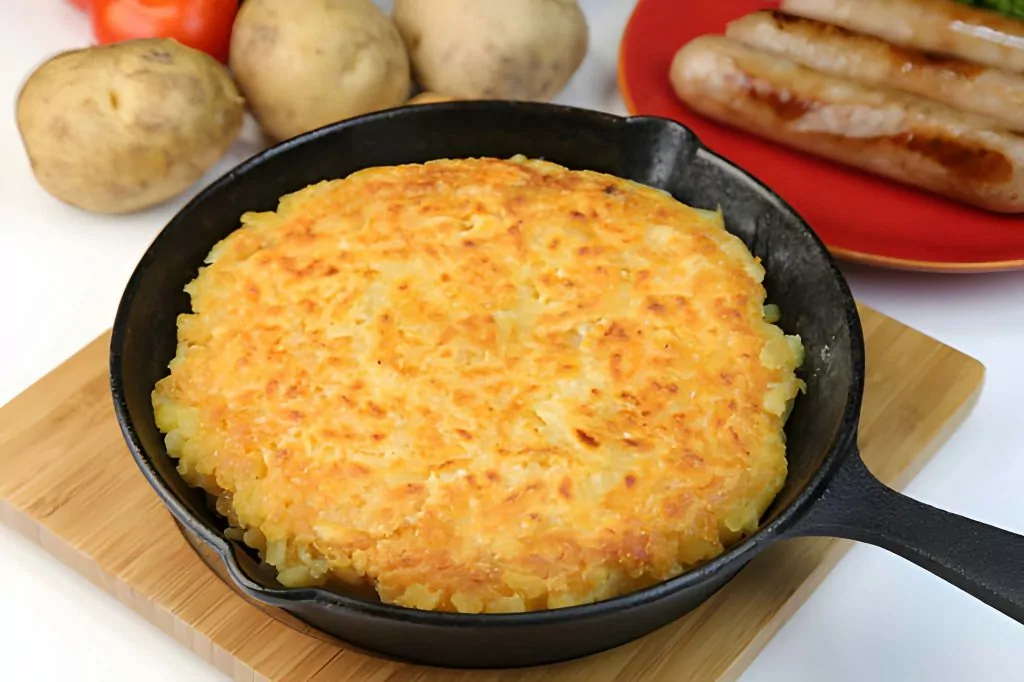
Preparation begins with grating the potatoes into long strands, which helps them knit together naturally during cooking. Removing excess moisture is essential; squeezing out liquid prevents steaming and encourages crisping in the pan. Once seasoned and lightly coated with melted butter, the potatoes are transferred to a gently heated pan. Shaping is done carefully, keeping the mixture loose rather than compacted, which allows heat to circulate evenly. Controlled cooking on each side builds a deep golden crust, and a confident flip ensures the rosti stays intact while developing uniform color.
Recipe Tips
- Select floury or all-purpose potatoes for the best balance of crisp edges and tender interiors.
- Squeeze the grated potatoes thoroughly; excess moisture is the most common cause of soggy rosti.
- Keep the heat moderate to allow gradual browning without scorching.
- Avoid pressing the potatoes firmly into the pan, as this can trap steam.
- Flip with confidence using a flat board or plate to maintain the rosti’s shape.
What to serve With this recipe
Potato rosti works effortlessly across meals. It pairs well with eggs, smoked salmon, sour cream, or fresh herbs for breakfast or brunch. For lunch or dinner, it complements roasted vegetables, grilled meats, or poultry. It can also serve as a neutral base for toppings such as sautéed mushrooms, crème fraîche, or lightly dressed greens.
Creative Variations
Grated onion or garlic can be mixed into the potatoes for added depth. Fresh herbs or spices introduce subtle aromatic notes without overwhelming the dish. Shaping the mixture into smaller, individual rosti allows for quicker cooking and easy portioning. Combining clarified butter with a neutral oil creates a slightly different browning profile while maintaining crispness.
Frequently Asked Questions
- Can rosti be made ahead? It is best cooked fresh, but partially cooked rosti can be finished just before serving.
- How can leftovers be reheated? Reheat in a skillet or oven to restore crispness; avoid microwaving.
- Is butter or ghee better? Ghee offers cleaner browning, while butter adds richer flavor.
- What pan works best? A wide, shallow non-stick pan makes flipping easier and prevents sticking.
- How can rosti be kept warm? Hold cooked rosti on a rack in a low oven until ready to serve.
Potato rosti proves that simple ingredients can deliver remarkable results when technique takes the lead. With careful moisture control and patient cooking, it achieves the ideal balance of crisp exterior and soft interior, making it a dependable, adaptable dish suitable for any time of day.
Ingredients
15g / 1 tbsp clarified butter, ghee, or regular butter, melted (Note 2)
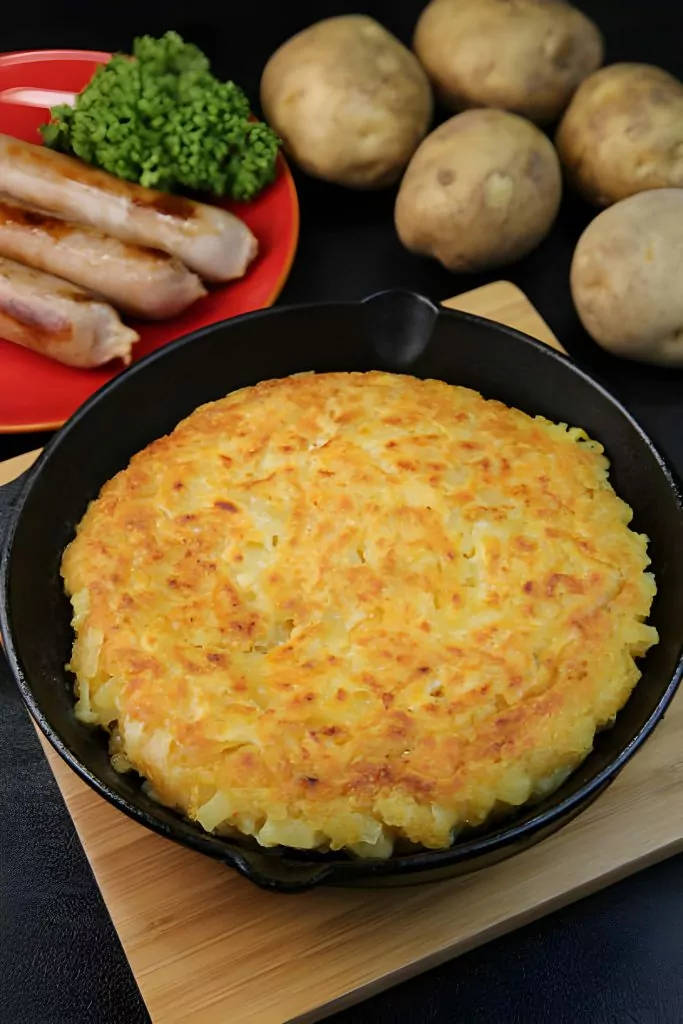
1kg / 2 lb potatoes (skin-on weight) – Aus: Sebago (dirt brushed), US: Yukon Gold or Russet, UK: Maris Piper or King Edwards (Note 1)
3/4 tsp kosher or cooking salt (or 1/2 tsp table salt)
1/2 tsp finely ground black pepper
Cooking
60g / 4 tbsp clarified butter or ghee, divided (or substitute with half butter and half vegetable oil) (Note 2)
Instructions
Grate & squeeze:
Peel the potatoes, then grate them using a box grater, aiming for long, even strands where possible. Take small handfuls of the grated potato and squeeze firmly to remove as much liquid as you can, then transfer to a bowl. Removing excess moisture is essential for achieving a crisp result, as it prevents excess steaming during cooking.
Add the melted butter, salt, and pepper to the potatoes and toss until evenly coated. If the potatoes begin to darken slightly, don’t be concerned—this is harmless and will reverse once cooked.
Cook:
Heat half of the clarified butter in a wide, shallow non-stick pan (about 26cm / 10.5 inches) over medium-low heat. A pan with gently sloped sides makes flipping easier. Add the potatoes to the pan without pressing them down. Use a rubber spatula to neaten the edges, then lightly pat the surface so it’s level, keeping the mixture loose rather than compacted.
Cook the first side for about 12 minutes, until the underside turns deeply golden and crisp. Lift the edge occasionally with a spatula to check browning. If there’s little color after 8 minutes, slightly increase the heat. As a precaution, run the spatula fully underneath to ensure nothing is sticking before flipping.
Flip:
Place a round wooden board with a handle, or a similar flat tool, over the pan. Holding it firmly, flip the rosti quickly and confidently.
Cook the second side:
Add the remaining clarified butter to the pan, then slide the rosti back in. Cook for another 12 minutes until the underside is golden and crisp and a knife inserted into the center meets no resistance, indicating the potatoes are fully cooked.
Slide the rosti onto a cutting board, slice into 4 or 6 wedges, and serve straight away.
Small rosti:
For individual portions, use about 25g / 1½ tbsp clarified butter per batch over medium heat in a non-stick pan. Shape the potato into rounds roughly 8cm / 3 inches wide and 1.5–2cm / 2/3 inch thick, without pressing down. Cook for 5 minutes until deeply golden and crisp, flip, then cook another 5 minutes until done.
To hold / keep warm:
Transfer cooked rosti to a rack set over a tray and keep warm in a 120°C / 250°F oven until ready to serve.
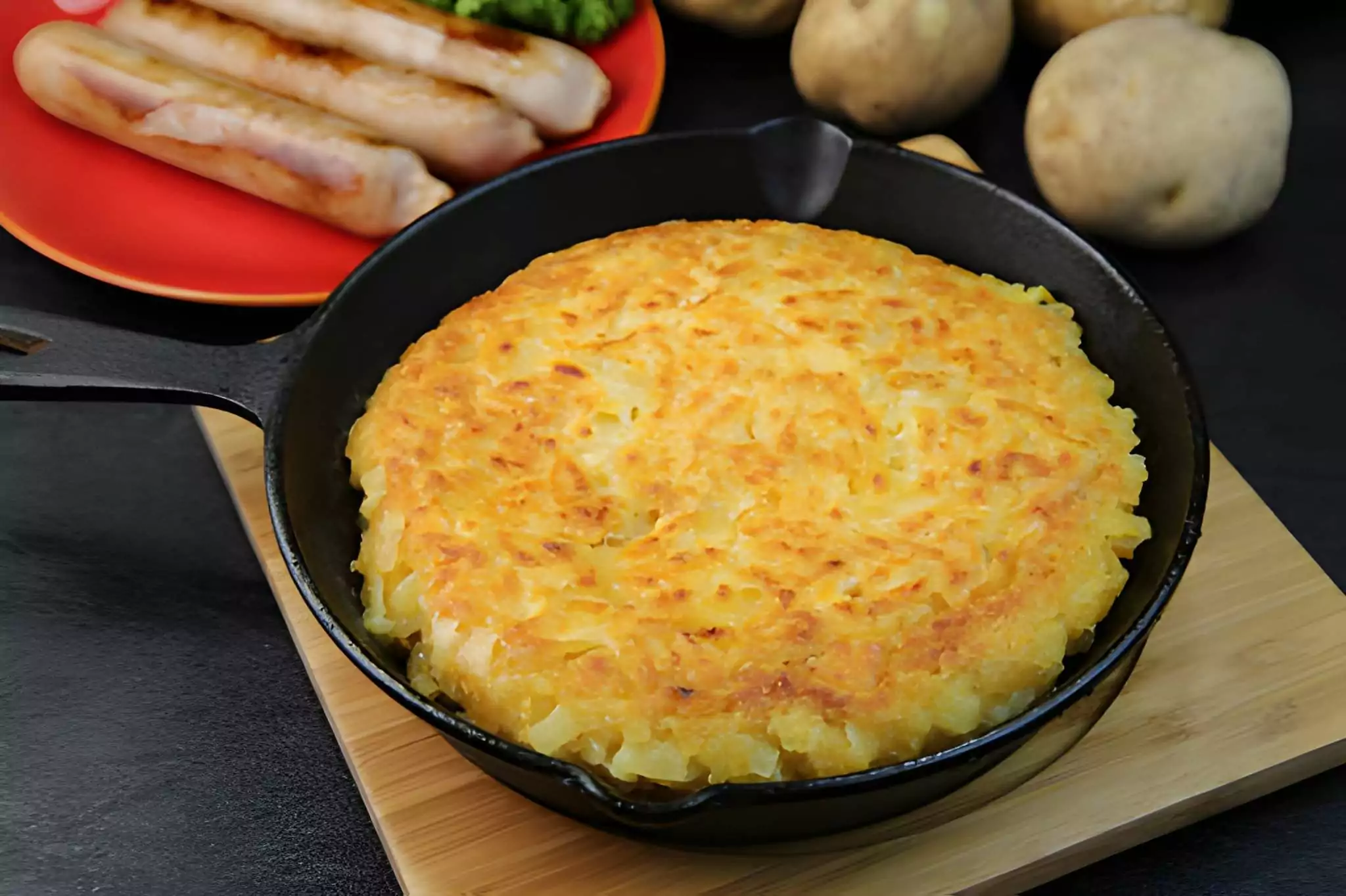
Potato Rosti Recipe
Ingredients
- 15 g / 1 tbsp clarified butter ghee, or regular butter, melted (Note 2)
- 1 kg / 2 lb potatoes skin-on weight – Aus: Sebago (dirt brushed), US: Yukon Gold or Russet, UK: Maris Piper or King Edwards (Note 1)
- 3/4 tsp kosher or cooking salt or 1/2 tsp table salt
- 1/2 tsp finely ground black pepper
Cooking
- 60 g / 4 tbsp clarified butter or ghee divided (or substitute with half butter and half vegetable oil) (Note 2)
Instructions
Grate & squeeze:
- Peel the potatoes, then grate them using a box grater, aiming for long, even strands where possible. Take small handfuls of the grated potato and squeeze firmly to remove as much liquid as you can, then transfer to a bowl. Removing excess moisture is essential for achieving a crisp result, as it prevents excess steaming during cooking.
- Add the melted butter, salt, and pepper to the potatoes and toss until evenly coated. If the potatoes begin to darken slightly, don’t be concerned—this is harmless and will reverse once cooked.
Cook:
- Heat half of the clarified butter in a wide, shallow non-stick pan (about 26cm / 10.5 inches) over medium-low heat. A pan with gently sloped sides makes flipping easier. Add the potatoes to the pan without pressing them down. Use a rubber spatula to neaten the edges, then lightly pat the surface so it’s level, keeping the mixture loose rather than compacted.
- Cook the first side for about 12 minutes, until the underside turns deeply golden and crisp. Lift the edge occasionally with a spatula to check browning. If there’s little color after 8 minutes, slightly increase the heat. As a precaution, run the spatula fully underneath to ensure nothing is sticking before flipping.
Flip:
- Place a round wooden board with a handle, or a similar flat tool, over the pan. Holding it firmly, flip the rosti quickly and confidently.
Cook the second side:
- Add the remaining clarified butter to the pan, then slide the rosti back in. Cook for another 12 minutes until the underside is golden and crisp and a knife inserted into the center meets no resistance, indicating the potatoes are fully cooked.
- Slide the rosti onto a cutting board, slice into 4 or 6 wedges, and serve straight away.
Small rosti:
- For individual portions, use about 25g / 1½ tbsp clarified butter per batch over medium heat in a non-stick pan. Shape the potato into rounds roughly 8cm / 3 inches wide and 1.5–2cm / 2/3 inch thick, without pressing down. Cook for 5 minutes until deeply golden and crisp, flip, then cook another 5 minutes until done.
To hold / keep warm:
- Transfer cooked rosti to a rack set over a tray and keep warm in a 120°C / 250°F oven until ready to serve.