-
Potatoes
Rosti performs well with both waxy and starchy potatoes. Floury varieties create a softer, fluffier interior similar to mashed potato, while waxy potatoes stay tender and hold their grated strands more distinctly. Both crisp successfully, though waxy potatoes tend to produce a slightly firmer crust. There is no single “correct” choice, so a reliable all-rounder or a potato leaning slightly toward floury works well. Good options include Sebago (Australia), Yukon Gold (US), and Maris Piper or King Edwards (UK). -
Clarified butter / ghee
Clarified butter and ghee are essentially the same product—butter with the water and milk solids removed. This results in a purer butter flavor, a higher smoke point, and improved crisping. Clarified butter is traditionally European, while ghee is commonly used in Indian cooking and has a slightly nuttier profile, though the two are interchangeable. Ghee is widely available in jars at supermarkets or Indian grocers. Making it at home is inexpensive, simple, and yields a clean, long-lasting fat that works well for frying and roasting.
Substitutions:
– Use melted regular butter when mixing into the potatoes to help distribute seasoning and add flavor.
– For cooking, use 15g / 1 tbsp butter combined with 1 tbsp vegetable oil per side. -
Flipping method
A round wooden board with a handle provides the best control when flipping a rosti. Holding the handle allows for a confident, stable motion compared to using a flat plate. Position the rosti closer to the handle for added leverage. A rectangular board or large plate can also work, especially with an extra pair of hands to assist during the flip. -
Reheating
Small rosti reheat best on a rack set over a tray in a 200°C / 390°F oven for about 7 minutes. Large rosti require roughly 10 minutes using the same method. Smaller portions regain crispness more effectively than larger ones.
Potato Rosti Recipe
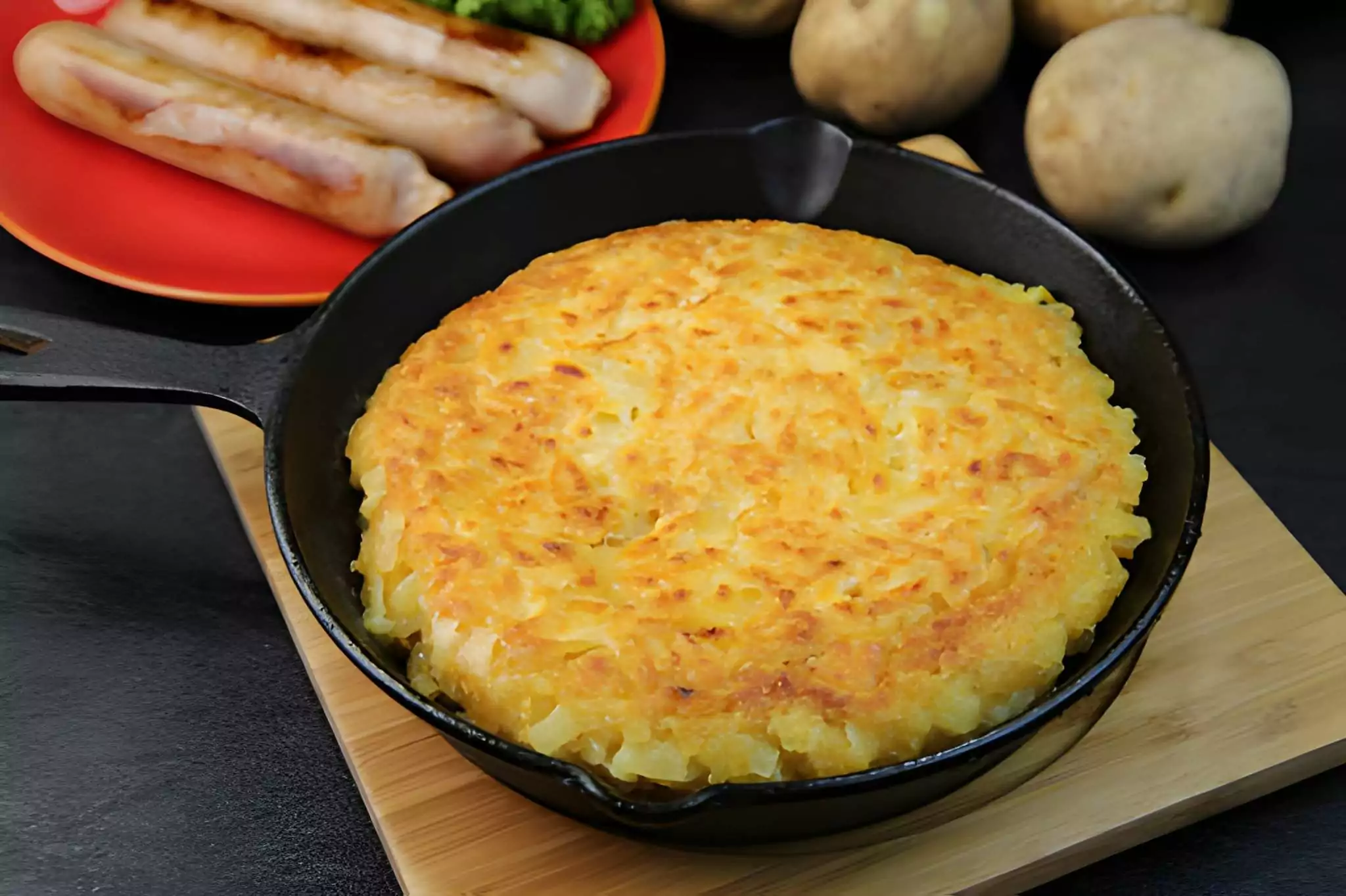
Crisp on the outside and tender at the center, potato rosti delivers rich, golden flavor with a satisfying bite. This simple preparation turns grated potatoes and butter into a comforting dish that works across any meal.
Print
Pin
Servings: 4
Calories: 320kcal
Ingredients
- 15 g / 1 tbsp clarified butter ghee, or regular butter, melted (Note 2)
- 1 kg / 2 lb potatoes skin-on weight – Aus: Sebago (dirt brushed), US: Yukon Gold or Russet, UK: Maris Piper or King Edwards (Note 1)
- 3/4 tsp kosher or cooking salt or 1/2 tsp table salt
- 1/2 tsp finely ground black pepper
Cooking
- 60 g / 4 tbsp clarified butter or ghee divided (or substitute with half butter and half vegetable oil) (Note 2)
Instructions
Grate & squeeze:
- Peel the potatoes, then grate them using a box grater, aiming for long, even strands where possible. Take small handfuls of the grated potato and squeeze firmly to remove as much liquid as you can, then transfer to a bowl. Removing excess moisture is essential for achieving a crisp result, as it prevents excess steaming during cooking.
- Add the melted butter, salt, and pepper to the potatoes and toss until evenly coated. If the potatoes begin to darken slightly, don’t be concerned—this is harmless and will reverse once cooked.
Cook:
- Heat half of the clarified butter in a wide, shallow non-stick pan (about 26cm / 10.5 inches) over medium-low heat. A pan with gently sloped sides makes flipping easier. Add the potatoes to the pan without pressing them down. Use a rubber spatula to neaten the edges, then lightly pat the surface so it’s level, keeping the mixture loose rather than compacted.
- Cook the first side for about 12 minutes, until the underside turns deeply golden and crisp. Lift the edge occasionally with a spatula to check browning. If there’s little color after 8 minutes, slightly increase the heat. As a precaution, run the spatula fully underneath to ensure nothing is sticking before flipping.
Flip:
- Place a round wooden board with a handle, or a similar flat tool, over the pan. Holding it firmly, flip the rosti quickly and confidently.
Cook the second side:
- Add the remaining clarified butter to the pan, then slide the rosti back in. Cook for another 12 minutes until the underside is golden and crisp and a knife inserted into the center meets no resistance, indicating the potatoes are fully cooked.
- Slide the rosti onto a cutting board, slice into 4 or 6 wedges, and serve straight away.
Small rosti:
- For individual portions, use about 25g / 1½ tbsp clarified butter per batch over medium heat in a non-stick pan. Shape the potato into rounds roughly 8cm / 3 inches wide and 1.5–2cm / 2/3 inch thick, without pressing down. Cook for 5 minutes until deeply golden and crisp, flip, then cook another 5 minutes until done.
To hold / keep warm:
- Transfer cooked rosti to a rack set over a tray and keep warm in a 120°C / 250°F oven until ready to serve.
Notes
Nutrition
Calories: 320kcal