
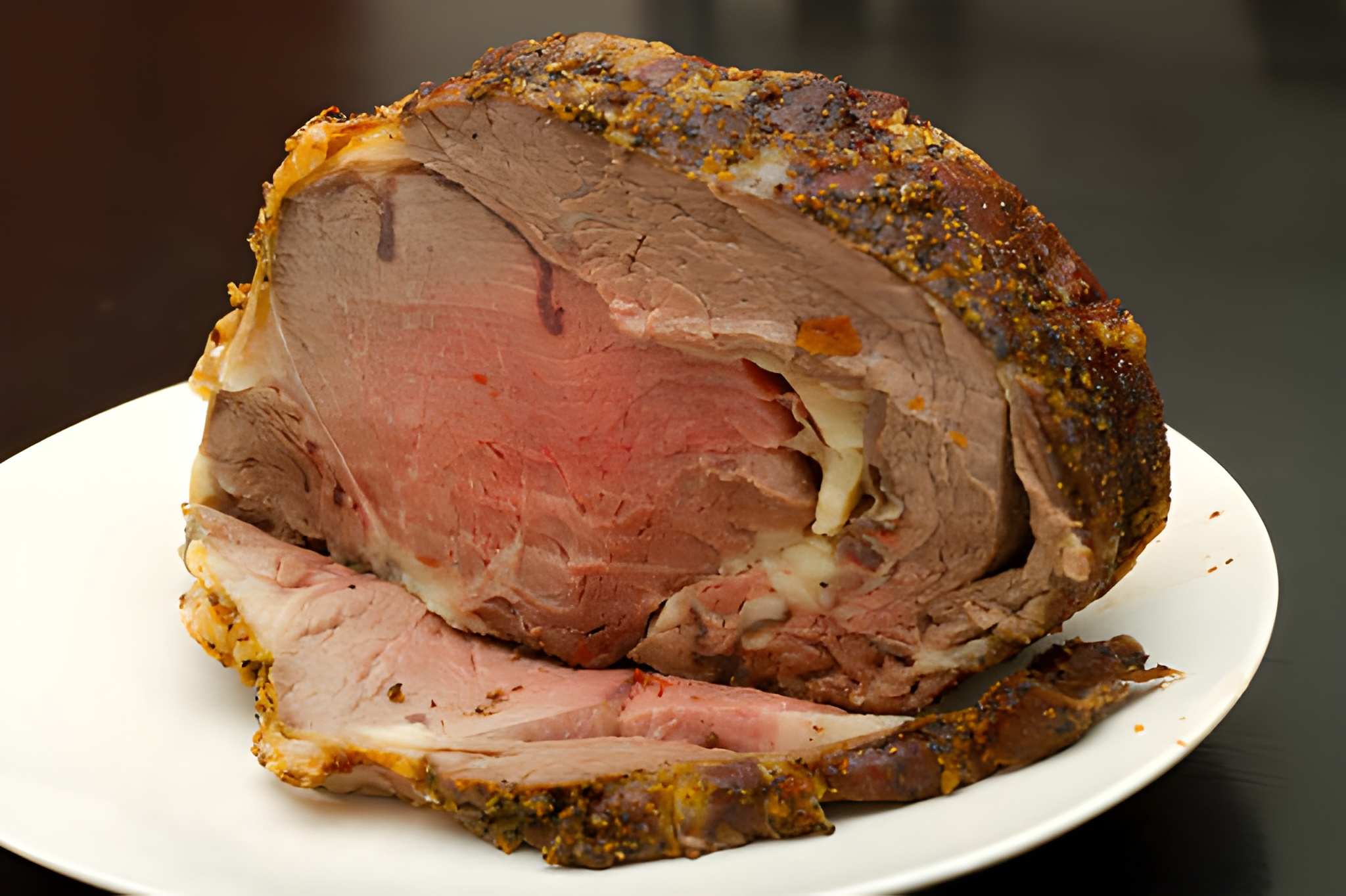
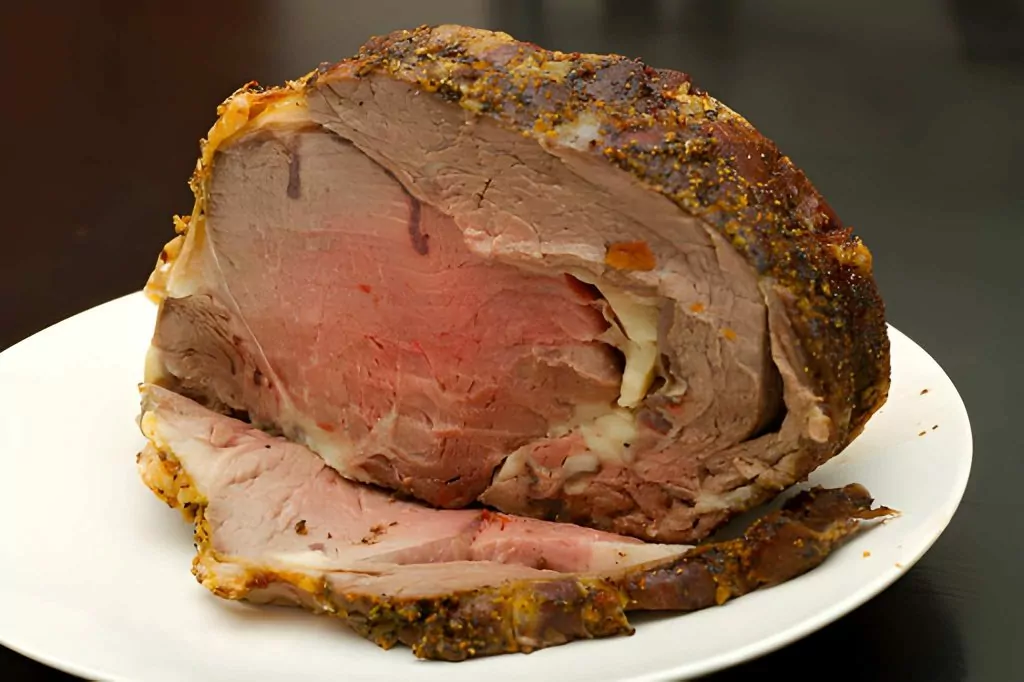
A reverse-seared prime rib is defined by restraint, patience, and precision. Slow roasting at a low temperature allows the meat to cook evenly from edge to center, while a final blast of intense heat creates a deeply browned, crisp exterior. The result is a roast that is tender throughout, richly flavored, and visually impressive—well suited for celebratory meals and large gatherings.

Ingredient Breakdown
At the heart of this dish is a standing rib roast with good marbling, which ensures moisture and flavor during the long cooking process. Kosher salt plays a critical role in seasoning deeply and evenly, while freshly ground black pepper adds gentle heat and aromatic complexity. The minimal ingredient list is intentional, allowing the natural character of the beef to remain the focus without distraction.
Step-by-Step Preparation Guide
Preparation begins by seasoning the roast generously, ensuring every surface is well coated. The roast is then positioned fat-side up on a rack, allowing heat to circulate freely and promoting even cooking. Slow roasting at a very low temperature gradually brings the meat to the desired internal doneness without creating a thick overcooked outer layer.
Once removed from the oven, the resting phase is essential. This pause allows juices to redistribute and stabilizes the internal temperature. The final step is a high-heat sear, returned briefly to a blazing hot oven to form a crisp, deeply browned crust that contrasts beautifully with the tender interior.
Recipe Tips
- Choose a roast size appropriate for your gathering, allowing roughly 450–500g (1 lb) per person with bones included.
- Use a reliable instant-read thermometer to monitor doneness accurately throughout cooking.
- Keep oven temperatures steady during the slow roast phase to avoid uneven cooking.
- Allow sufficient resting time; this step is as important as the cooking itself.
- For the final sear, ensure the oven is fully preheated to achieve a strong crust without extending cooking time.
What to serve With this recipe
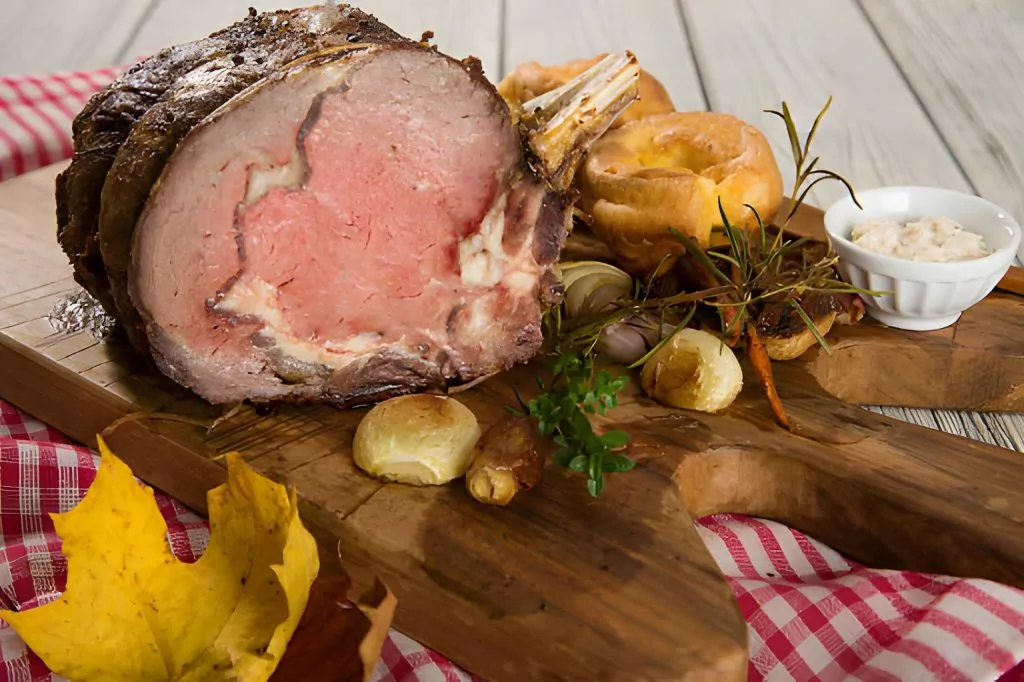
Prime rib pairs well with classic accompaniments that balance its richness. Roasted or mashed potatoes absorb pan juices beautifully, while Yorkshire pudding adds contrast in texture. Sautéed greens such as spinach or green beans provide freshness, and sauces like horseradish cream, beef gravy, or au jus enhance each slice without overpowering the meat.
Creative Variations
The exterior can be enhanced with a light herb crust using rosemary, thyme, or cracked peppercorns. During the resting phase, the roast can be brushed with butter or infused with garlic for added aroma. Flavored salts, such as smoked or herb-blended varieties, introduce subtle complexity, while compound butter served at the table offers a finishing touch of richness.
Frequently Asked Questions
- What is the ideal internal temperature? This depends on preference, but medium-rare is typically achieved around 130°F (54°C) after resting.
- Can this be prepared ahead? The slow-roast phase can be completed in advance, with the final sear done just before serving.
- Why is resting necessary? Resting prevents juices from escaping during carving and improves overall texture.
- How should it be carved? Slice against the grain, removing bones first if necessary, for the most tender servings.
- Does roast size affect timing? Larger roasts require more time but follow the same temperature-based approach.
Reverse-seared prime rib stands out for its consistency, control, and impressive results. By combining slow, even cooking with a final high-heat sear, this method delivers tender beef with a striking crust and minimal guesswork. It remains a dependable choice for special occasions, offering both culinary precision and memorable presentation.

Ingredients
Kosher salt and freshly ground black pepper
1 standing rib roast (prime rib), 3 to 12 pounds (1.3 to 5.4 kg; see note)
Instructions
Set the oven to its lowest possible temperature, ideally 150°F (66°C). If your oven cannot maintain that low setting, use the lowest available temperature (some models only go down to 250°F / 121°C). Season the rib roast generously on all sides with kosher salt and freshly ground black pepper.
Position the roast fat-side up on a V-rack inside a large roasting pan, or place it on a wire rack set over a rimmed baking sheet. Transfer to the oven and cook slowly until the center reaches the desired internal temperature when checked with an instant-read thermometer: 120–125°F (49–52°C) for rare, 130°F (54°C) for medium-rare, or 135°F (57°C) for medium to medium-well. At 150°F, this process typically takes 5½ to 6½ hours; at 250°F, expect approximately 3½ to 4 hours.
Remove the roast from the oven and tent it loosely with aluminum foil. Let it rest in a warm area of the kitchen for at least 30 minutes and up to 1½ hours, allowing the juices to redistribute evenly throughout the meat. During this resting period, increase the oven temperature to its highest setting, between 500 and 550°F (260–288°C).
About 10 minutes before serving, uncover the roast and return it to the hot oven. Roast until the exterior develops a deep brown color and a crisp crust, about 6 to 10 minutes. Remove from the oven, carve immediately, and serve while hot.

Roasted and Reverse Seared Prime Rib Recipe
Ingredients
- Kosher salt and freshly ground black pepper
- 1 standing rib roast prime rib, 3 to 12 pounds (1.3 to 5.4 kg; see note)
Instructions
- Set the oven to its lowest possible temperature, ideally 150°F (66°C). If your oven cannot maintain that low setting, use the lowest available temperature (some models only go down to 250°F / 121°C). Season the rib roast generously on all sides with kosher salt and freshly ground black pepper.
- Position the roast fat-side up on a V-rack inside a large roasting pan, or place it on a wire rack set over a rimmed baking sheet. Transfer to the oven and cook slowly until the center reaches the desired internal temperature when checked with an instant-read thermometer: 120–125°F (49–52°C) for rare, 130°F (54°C) for medium-rare, or 135°F (57°C) for medium to medium-well. At 150°F, this process typically takes 5½ to 6½ hours; at 250°F, expect approximately 3½ to 4 hours.
- Remove the roast from the oven and tent it loosely with aluminum foil. Let it rest in a warm area of the kitchen for at least 30 minutes and up to 1½ hours, allowing the juices to redistribute evenly throughout the meat. During this resting period, increase the oven temperature to its highest setting, between 500 and 550°F (260–288°C).
- About 10 minutes before serving, uncover the roast and return it to the hot oven. Roast until the exterior develops a deep brown color and a crisp crust, about 6 to 10 minutes. Remove from the oven, carve immediately, and serve while hot.